A latest study has said investing in seed multiplication models, value-addition and community-level storage and aggregation facilities could transform Soybean into one of the most profitable value-chains in the country.
The study by Mwapata Institute comes at a time global soybean production has risen 15-fold from 26.8 million tonnes in 1961 to 371 million tonnes in 2023 but Malawi’s earnings from the crop remain low despite having favourable soils.
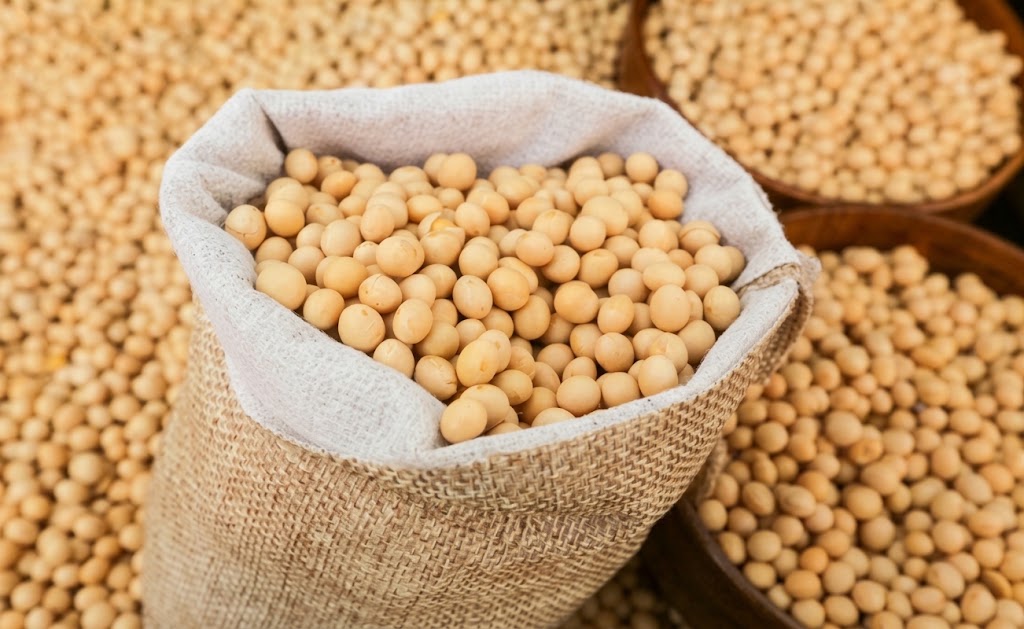
Titled ‘Strategies for building a more profitable soybean value-chain in Malawi’, the study has outlined four key strategies, including enhancing yields through better agronomic practices, seed systems, storage facilities and value-addition.
“Enhance seed multiplication models by supporting commercial farmers and cooperatives to participate in the production of certified seed, while also training farmers in seed selection and storage.
“Promote value addition by supporting farmers with equipment, working capital, and training to increase the production of soy-based products,” reads part of the report.
Published by Anderson Gondwe, Lemekezani Kingston Chilora, Christone Nyondo, and Levison Chiwaula, it also notes that investing in community-level storage and aggregation facilities could mitigate losses by allowing farmers to take advantage of higher prices during lean seasons.
According to the study, soybean and it’s products have registered increases in global prices between 1990 and 2024 due to increasing demand for biofuels but Malawi has continued realising little from the crop due to low production.
“National productivity remains about 50 percent below potential, largely due to limited access to inputs, soybean rust and the impacts of climate change. Farmer profitability can be significantly enhanced by narrowing the yield gap and linking producers to premium off-takers.
“Sustaining competitiveness will require investments in seed multiplication, good agricultural practices, mechanisation, value addition, storage, and aggregation,” the report added.
For instance, Mwapata Institute projects that on average, cooperatives obtained total revenue of $959.45 (K1.7 million) per hectare (ha) based on an average yield of 1 400 kilogramme (kg)/ha and the farm gate price of K1 200/kg for the 2025 season.
It has, however, highlighted that the margins for smallholders are low due to poor yields and can be improved by both improving productivity and strengthening linkages with high-end off-takers—who offer prices up to 20 percent higher.
Earlier, the think-tank projected that Malawi could earn $97.1 million (K170 billion) per annum from soybeans and add 35 700 jobs by implementing policy reforms that target the value-chain of the subsector.
In an interview, Farmers Union of Malawi president Mannes Nkhata said the research policy brief has exposed the real challenges that soybean farmers are facing and acts as the guideline for policy makers on initiatives to uplift the sector.
“First, soybean farmers lack access to certified and improved seed that can increase their production and productivity. As a result, yields for most farmers are still below one ton/ha against the potential of up to three tonnes/ha.
“Again, the export ban reduces competition among soybean off-takers thereby suppressing domestic farm gate prices. This eventually disincentives soybean farmers,” Nkhata said.
In a separate interview, agriculture policy expert Tamani Nkhono-Mvula said the policy reform proposals have come at a right time when the country is underutilising soybean value-chain potential.
For instance, Nkhono-Mvula described the export bans that are regularly imposed on soybean as a sign of production deficiencies as producers fail to satisfy the domestic market.
“At one point, Malawi was the leading producer of groundnuts in the region. That should translate the potential of soybean production as the two crops are both legumes meaning the latter could equally do well in most parts of the country,” he said.
Earlier, Ministry of Agriculture said it is banking on mega farms and introduction of modern varieties to boost soybean production which would enable the country to satisfy export markets, including China.
Most of the soybean in the world is produced by Brazil, the United States of America, Argentina, China, India, and Paraguay.
About 76 percent of soybean production is used as a protein source for animal feed, whereas 20 percent is consumed by humans as edible oils, tofu, soy milk, and tempeh, among others, and the remaining four percent is used for industrial purposes.